
Table of Contents
The only constant in business is Change.
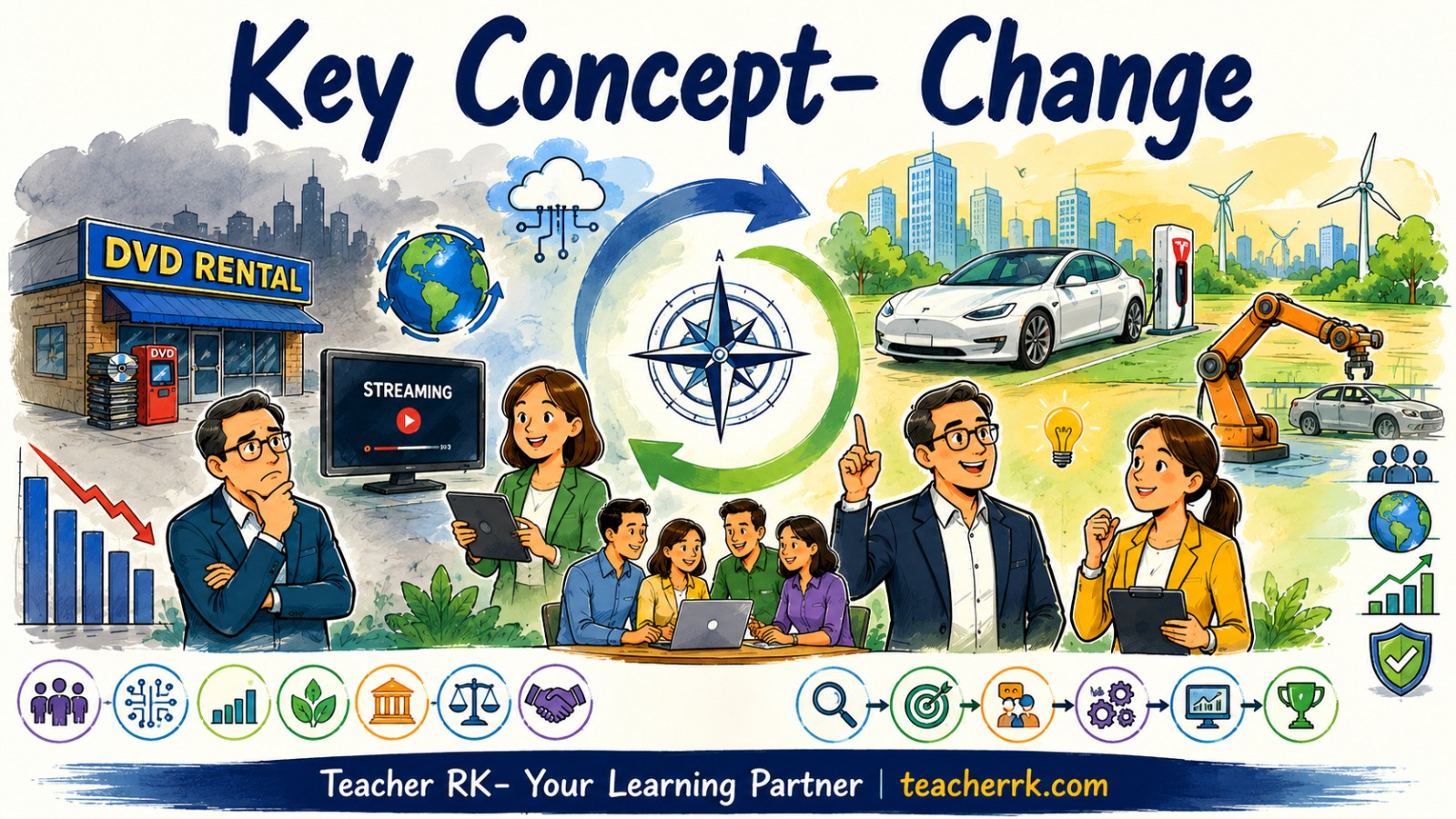
Think about some of the world’s most successful companies. Netflix transformed from a DVD rental company into a global streaming giant. Tesla revolutionized the automobile industry by embracing electric vehicles and automation. These businesses didn’t succeed by staying the same—they succeeded because they adapted.
In today’s fast-changing business environment, organizations that embrace change are more likely to survive, grow, and remain competitive. Understanding the concept of change is therefore one of the most important foundations of Business Management.
What is Change?
Change is the process of adapting to internal or external factors that affect a business. As markets evolve, customer preferences shift, and new technologies emerge, businesses must continuously adjust their strategies and operations.
Change is not optional—it is essential for long-term success.
Some common examples of change include:
- Technological advancements
- Changing consumer preferences
- Increasing competition
- Government regulations
- Global economic conditions
Businesses that respond quickly to these changes gain a competitive advantage over those that resist them.
What causes change? – The STEEPLE Framework
Business managers often use the STEEPLE framework to identify the major forces driving change.
· Social – Demographic changes and lifestyle trends
· Technological – Innovation, AI, automation, and digital transformation
· Economic – Inflation, interest rates, and economic growth
· Environmental – Climate change and sustainability concerns
· Political – Government policies and political stability
· Legal – New laws and regulations
· Ethical – Rising expectations for responsible and transparent business practices
These external factors constantly reshape the business landscape, requiring organizations to stay alert and responsive.
Real-world business examples
Successful companies view change as an opportunity rather than a threat.
Netflix recognized the shift from physical media to online entertainment and reinvented its entire business model by introducing streaming services.
Similarly, Tesla embraced automation and advanced manufacturing technologies to improve efficiency and strengthen its competitive position in the electric vehicle market.
Their success demonstrates that innovation and adaptability often lead to industry leadership.
How change influences business decisions
Managers make strategic decisions every day to help their organizations adapt to change. These decisions may include:
- Investing in new technologies
- Restructuring departments
- Retraining employees with new skills
- Entering new markets
Every major business decision should prepare the organization for future challenges and opportunities rather than simply solving today’s problems.
Why is change important?
Businesses that effectively manage change enjoy several advantages:
- Remain competitive in rapidly changing markets
- Improve efficiency through innovation and better processes
- Respond quickly to emerging opportunities and threats
Organizations that fail to adapt often lose customers, market share, and profitability. History has shown that even large companies can decline if they ignore changing market conditions.
Effective change management
Successful change does not happen by accident. It requires careful planning and strong leadership. A simple six-step approach includes:
Step 1: Recognize the need for change.
Step 2: Plan clear goals and strategies.
Step 3: Communicate the vision effectively.
Step 4: Implement the changes with support.
Step 5: Monitor progress and make improvements.
Step 6: Sustain the change by reinforcing new practices.
When employees understand the purpose of change and are actively involved in the process, organizations are far more likely to succeed.
Conclusion
Change is no longer an occasional event—it is a continuous reality. Businesses that embrace innovation, anticipate trends, and adapt quickly are the ones that thrive in today’s competitive world.
Whether driven by technology, customer expectations, or global events, change presents both challenges and opportunities. Effective managers view change not as something to fear but as a powerful catalyst for growth, innovation, and long-term success.
| Change is not just about survival—it’s about creating a better future. |
Critical thinking questions
| a) Why do some businesses successfully adapt to change while others fail, even when they face similar external conditions? b) To what extent should businesses anticipate change rather than simply react to it? Explain with examples. c) Can resisting change ever be a better strategy than embracing it? Justify your answer with business examples. d) How can poor change management negatively affect employees, customers, and overall business performance? e) If you were the CEO of a traditional retail company, what major changes would you implement to remain competitive over the next ten years? |