
Table of Contents
The Foundation of Responsible Business Success
“A business can make profits without ethics—but it cannot build lasting trust without them.”
Imagine buying a product from a company that lies in its advertisements or exploits its workers. Would you buy from them again? Probably not. In today’s business world, customers, employees, and investors expect organizations to do more than make profits—they expect them to act responsibly.
Ethics has become one of the most important pillars of modern business management. Companies that make ethical decisions build stronger reputations, attract loyal customers, and achieve sustainable success. In contrast, unethical behaviour can damage a company’s image, lead to legal consequences, and even cause business failure.
What is Ethics?
Ethics refers to the moral principles and values that guide business behaviour. It helps organizations distinguish between what is right and what is wrong while making decisions.
Business ethics involves:
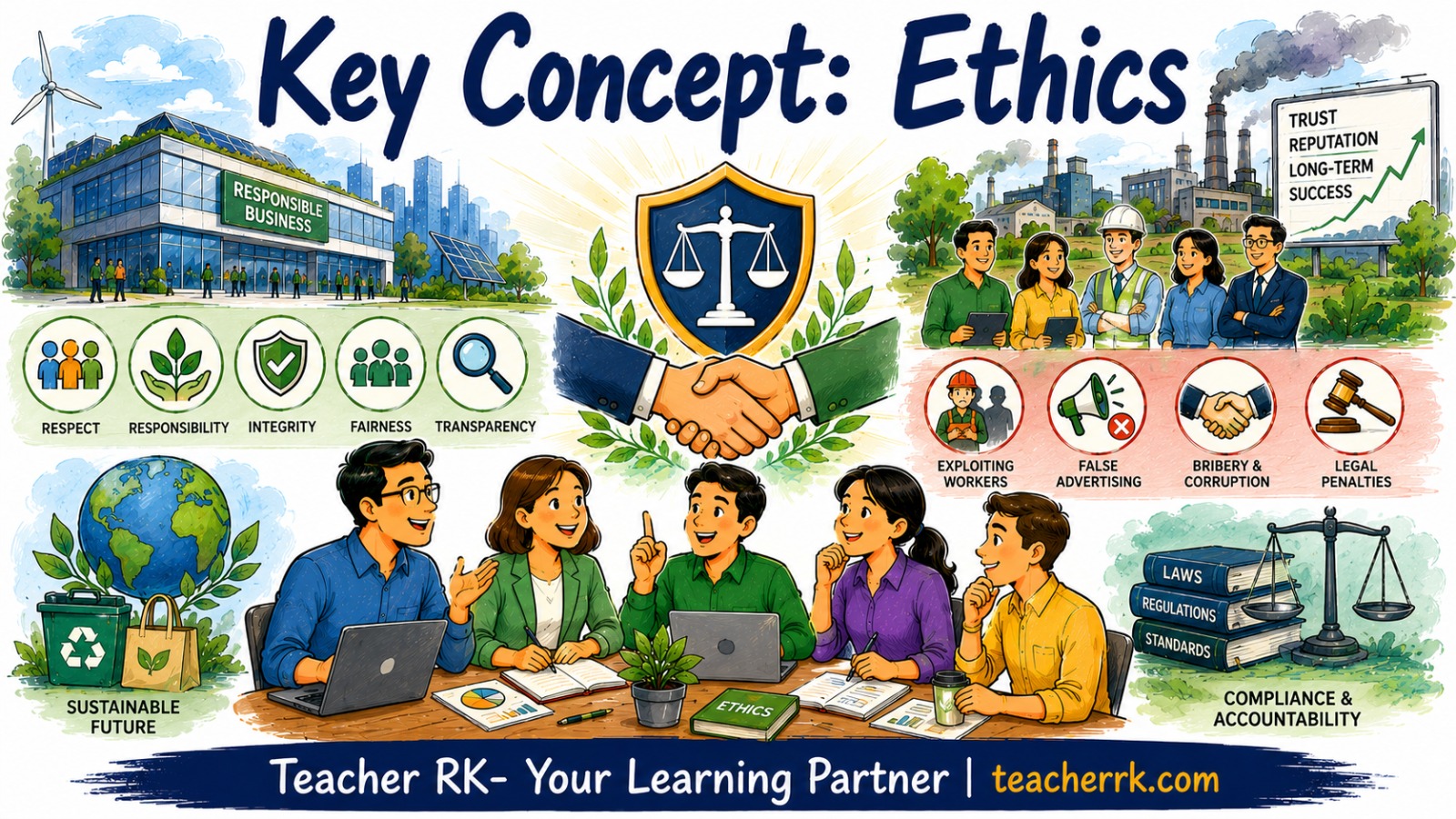
- Respecting all stakeholders, including employees, customers, suppliers, and the community.
- Balancing profit with social responsibility.
- Acting honestly, fairly, and transparently in every business activity.
Ethics is not just about following the law—it is about doing the right thing, even when no one is watching.
Ethical vs. Unethical business practices
Every business decision reflects an organization’s values.
Ethical practices
- Paying fair wages to employees
- Providing safe working conditions
- Honest marketing and truthful advertising
Unethical practices
- Exploiting workers
- False or misleading advertisements
- Bribery and corruption
While unethical practices may generate short-term gains, they often result in long-term financial losses and reputational damage.
Real-world business examples
Some companies have earned global respect because they place ethics at the heart of their business.
Patagonia is widely recognized for responsible sourcing, environmental sustainability, and fair labour practices. Its commitment to ethical business has strengthened customer loyalty and brand reputation.
On the other hand, Volkswagen faced severe criticism during its emissions scandal, where software was used to manipulate pollution test results. The incident led to billions of dollars in fines, legal action, and significant damage to the company’s reputation.
These examples highlight how ethical decisions can build trust, while unethical behaviour can destroy it.
How ethics influences business decisions
Ethics shapes many important managerial decisions, including:
- Choosing responsible suppliers and managing ethical supply chains.
- Developing fair employee policies.
- Setting honest and transparent pricing strategies.
- Investing in sustainable business practices.
Managers who prioritize ethics create workplaces built on trust, accountability, and long-term success.
Why ethics matters
Ethical businesses enjoy several important advantages:
- Build trust and a strong reputation among customers and stakeholders.
- Reduce legal and financial risks by complying with laws and ethical standards.
- Attract loyal customers, talented employees, and responsible investors.
In today’s competitive marketplace, reputation has become one of a company’s most valuable assets—and ethics is the foundation of that reputation.
Core ethical values every business should embrace
Strong ethical organizations are guided by a clear set of values:
- Integrity – Do the right thing, even when no one is watching.
- Respect – Value people, diversity, and different perspectives.
- Fairness – Make impartial and just decisions.
- Transparency – Be honest, open, and accountable.
- Responsibility – Care for society, the environment, and future generations.
When these values become part of an organization’s culture, ethical behaviour becomes a natural way of doing business.
Conclusion
Ethics is far more than a set of rules—it is the foundation of responsible and sustainable business management. In an age where information spreads instantly and customers demand greater accountability, organizations cannot afford to ignore ethical responsibilities.
Businesses that consistently act with integrity earn trust, strengthen relationships, and create long-term value for all stakeholders. Ethical decision-making not only protects a company’s reputation but also contributes to lasting business success.
| Ethics is not just a rule to follow—it’s a value to live by. Businesses that do what is right today build the trust that secures tomorrow. |
Critical thinking questions
| a) Should businesses always prioritize ethical decisions, even if it reduces short-term profits? Why? b) Can an unethical business remain successful in the long run? Support your answer with real-world examples. c) Who should have the greatest influence on a company’s ethical decisions—customers, governments, shareholders, or employees? Explain your reasoning. d) How can one unethical decision affect a company’s reputation, employee morale, and customer loyalty? e) If you discovered unethical practices in your organization, what actions would you take as a manager, and why? |