
Table of Contents
Building businesses for a better tomorrow
“The businesses that succeed tomorrow are the ones that protect the planet today.”
Imagine two companies. One focuses only on making profits, while the other balances profit with environmental protection and social responsibility. Which company is more likely to earn customer trust, attract investors, and thrive in the long run?
The answer is increasingly clear. In today’s world, sustainability is no longer just a corporate responsibility—it is a business strategy. Customers, governments, and investors expect organizations to create value while protecting the environment and supporting society. Businesses that embrace sustainability are better positioned for long-term success.
What is Sustainability?
Sustainability means meeting the needs of the present without compromising the ability of future generations to meet their own needs.
In business, sustainability involves balancing three important objectives:
· Economic success (Profit)
· Social responsibility (People)
· Environmental protection (Planet)
Rather than focusing only on short-term profits, sustainable businesses create value that benefits customers, employees, communities, and the environment.
The triple bottom line
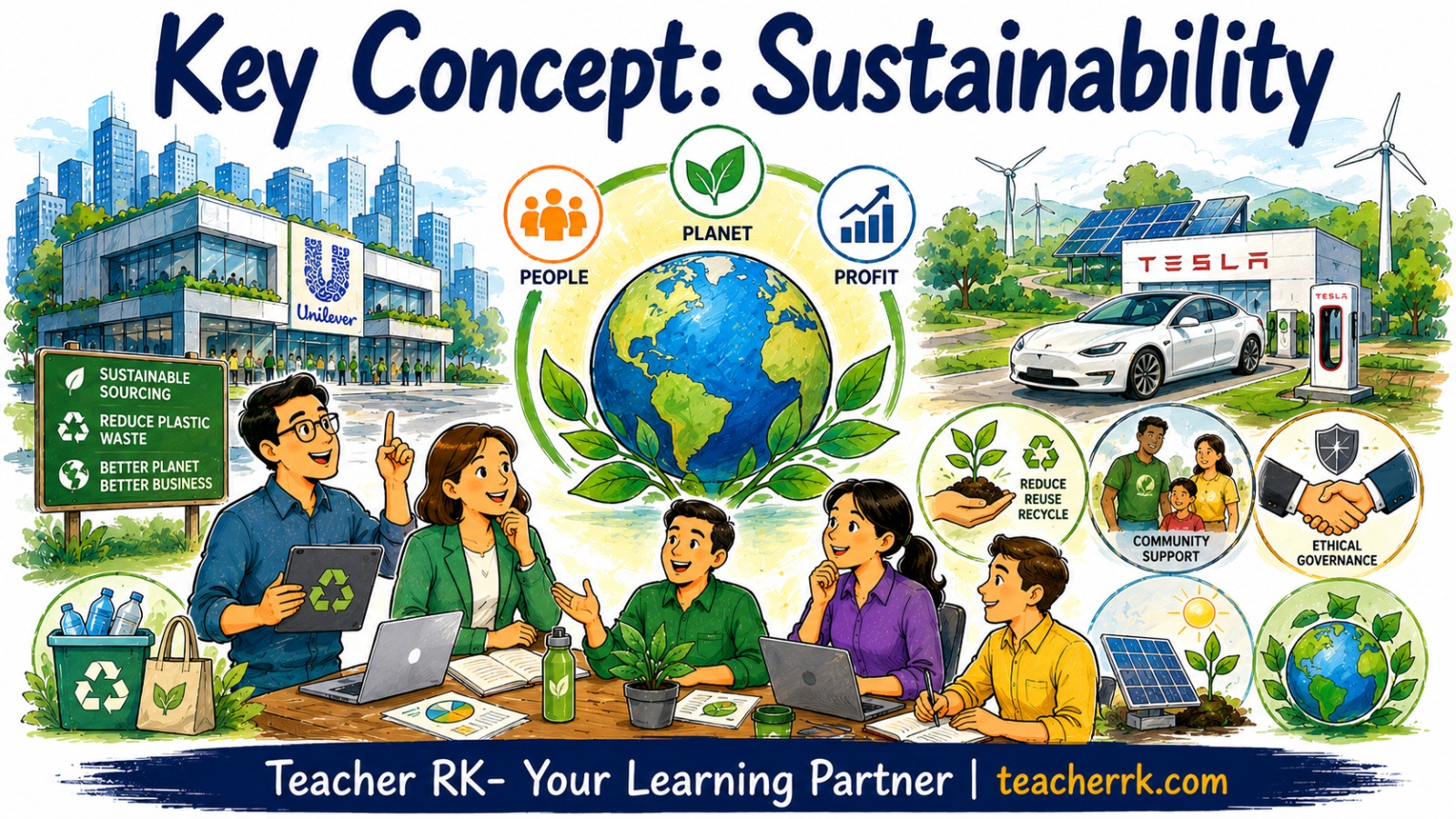
Sustainability is often explained using the Triple Bottom Line, which focuses on three interconnected pillars:
- People: Businesses should promote employee well-being, fair labour practices, diversity, and community development.
- Planet: Organizations should reduce pollution, conserve natural resources, minimize waste, and protect the environment.
- Profit: Businesses must remain financially successful while creating long-term value for all stakeholders.
True sustainability is achieved when these three goals work together.
Real-world business examples
Many global companies have made sustainability a core part of their business strategy.
Unilever has invested heavily in sustainable sourcing, reducing plastic waste, and improving environmental performance while continuing to grow globally.
Tesla has transformed the automobile industry by promoting renewable energy and electric vehicles, helping reduce dependence on fossil fuels.
These companies demonstrate that sustainability can drive both innovation and business growth.
How sustainability influences business decisions
Sustainability affects many strategic decisions made by business leaders, including:
- Choosing eco-friendly materials
- Investing in renewable energy
- Selecting ethical suppliers
- Making long-term investments that support sustainable growth
Modern businesses increasingly evaluate decisions not only by financial returns but also by their environmental and social impact.
Why sustainability is important
Businesses that embrace sustainability gain several long-term advantages:
· Reduce environmental impact by conserving resources and minimizing pollution.
· Comply with government regulations and international sustainability standards.
· Meet stakeholder expectations, including those of customers, employees, investors, and local communities.
Sustainable organizations often enjoy stronger brand loyalty, improved reputation, and greater resilience in a rapidly changing business environment.
Key pillars of sustainability
Successful sustainable businesses are built on five important pillars:
1. Environmental Responsibility – Protect natural resources and reduce pollution.
2. Social Responsibility – Support employees, communities, and fair labour practices.
3. Good Governance – Operate with transparency, accountability, and integrity.
4. Innovation – Develop sustainable products, technologies, and business models.
5. Responsibility – Take ownership of business decisions and their long-term impact.
Together, these pillars create businesses that are both profitable and socially responsible.
Conclusion
Sustainability is no longer a choice—it is a necessity for businesses that want to succeed in the twenty-first century. Organizations that balance People, Planet, and Profit are better equipped to manage risks, seize new opportunities, and create lasting value.
As environmental and social challenges continue to grow, sustainable thinking will become an essential skill for every future business leader. Companies that invest in sustainability today are building stronger brands, healthier communities, and a better future for generations to come.
| The goal of sustainability is not just to protect the environment—it is to create long-term success for businesses, society, and the planet. |
Critical thinking questions
| a) Should businesses invest in sustainability even if it increases costs in the short term? Why or why not? b) To what extent is sustainability a business opportunity rather than simply a social responsibility? c) Can businesses truly balance the Triple Bottom Line—People, Planet, and Profit—or will one always be prioritized? Explain d) How might consumer expectations influence a company’s sustainability strategy over the next decade? e) If you were the CEO of a manufacturing company, what sustainability initiatives would you introduce to ensure long-term success while remaining profitable? |