
Table of Contents
Introduction
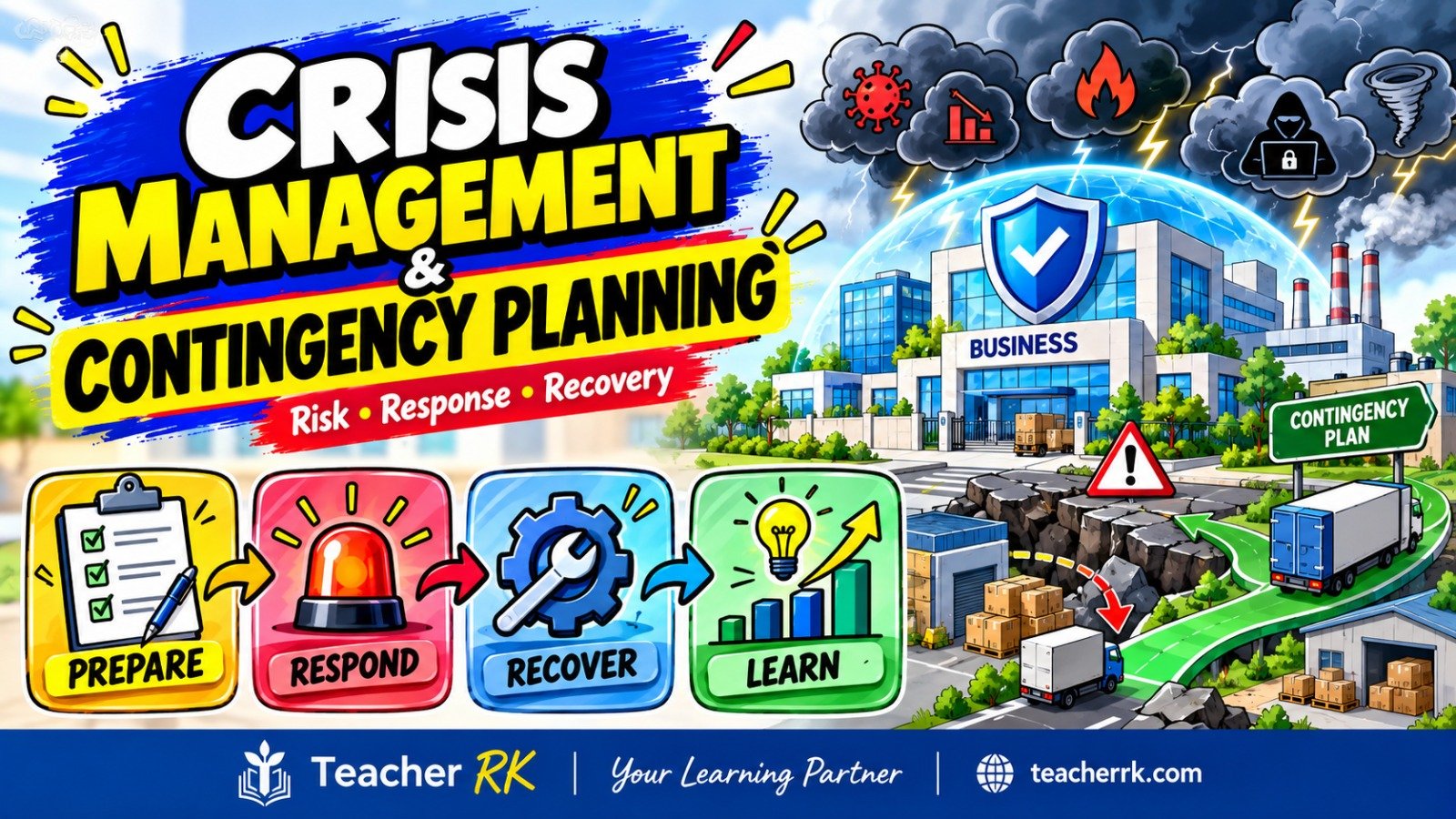
Crisis management and contingency planning are essential parts of IB Business Management. Businesses operate in an uncertain environment and may face unexpected events such as natural disasters, cyberattacks, product failures, accidents, or economic crises. These events can disrupt operations, damage a firm’s reputation, and cause financial losses.
To minimise their impact, businesses prepare contingency plans before a problem occurs and use effective crisis management strategies to respond when it does. In this guide, you will learn the meaning of both concepts, their key features, the difference between them, and the main factors that affect successful crisis management, along with a real-life example.
Meaning of crisis management
Crisis management meaning is the process of responding to and managing an unexpected event or emergency after it occurs in order to minimise its impact on the business, its stakeholders, and its reputation. Effective crisis management focuses on restoring normal business operations as quickly as possible.
Features of crisis management
· Responds to unexpected events after they occur.
· Focuses on minimising damage and disruption.
· Requires quick decision-making.
· Involves effective communication with stakeholders.
· Aims to restore normal business operations.
Meaning of contingency planning
Contingency planning is the process of identifying potential risks and preparing alternative plans or procedures that can be implemented if unexpected events occur. The objective of contingency planning is to minimise disruption and ensure business continuity during emergencies.
Features of contingency planning
· Identifies potential risks before they occur.
· Develops alternative plans for emergencies.
· Helps ensure business continuity.
· Reduces the impact of unexpected events.
· Requires regular review and updating.
Distinguishing between Crisis Management and Contingency Planning
Although contingency planning and crisis management are closely related, they differ in their purpose and timing. Contingency planning is a proactive approach that takes place before a crisis occurs. It involves identifying potential risks and developing alternative plans and procedures to reduce the impact of unexpected events. Its main objective is to ensure that the business is prepared for possible emergencies.
In contrast, crisis management is a reactive approach that is implemented after a crisis has occurred. It focuses on responding quickly and effectively to the situation, coordinating actions to minimise damage, protect stakeholders, and restore normal business operations. While contingency planning prepares the business for potential disruptions, crisis management helps the business recover from them.
Factors affecting effective crisis management
Transparency: Businesses should provide honest, accurate, and timely information during a crisis. Being transparent helps maintain stakeholder trust and reduces rumours or misinformation.
Communication: Clear and effective communication with employees, customers, suppliers, investors, the media, and other stakeholders is essential during a crisis. Regular updates help reduce uncertainty and maintain confidence.
Speed: Responding quickly to a crisis can prevent the situation from becoming worse. Delays in decision-making or communication may increase financial losses and damage the business’s reputation.
Control: Businesses should establish clear leadership and coordinate their response effectively. Maintaining control helps ensure that decisions are implemented efficiently, resources are managed properly, and the crisis is resolved as quickly as possible.
Example
A food manufacturer discovers that one of its products has been contaminated.
· Crisis management: The company immediately recalls the affected products, informs customers and regulators, communicates with the media, and investigates the cause of the contamination.
· Contingency planning: The company already has a product recall procedure and emergency communication plan.
Thus, contingency planning prepares a business for potential crises before they occur, while crisis management focuses on responding effectively after a crisis has occurred. Successful crisis management depends on transparency, effective communication, rapid decision-making, and maintaining control throughout the recovery process.
Quick Recap
1. Crisis management is the process of responding to and managing a crisis after it has occurred to minimise its impact.
2. Contingency planning is the process of preparing alternative plans to deal with potential risks or unexpected events before they occur.
3. Contingency planning is proactive, whereas crisis management is reactive.
4. The main objective of contingency planning is to ensure business preparedness, while the main objective of crisis management is to restore normal business operations.
5. Transparency during a crisis helps build trust by providing honest and timely information to stakeholders.
6. Effective communication ensures that employees, customers, suppliers, and other stakeholders receive accurate and regular updates during a crisis.
7. Speed is essential in crisis management because a rapid response can reduce financial losses and protect the business’s reputation.
8. Control enables businesses to coordinate resources, make effective decisions, and manage the crisis efficiently until normal operations resume.