
Table of Contents
Introduction
Producing high-quality products and services is essential for customer satisfaction and business success. To achieve this, businesses implement quality management practices that help ensure products meet required standards and customer expectations. Two important approaches are quality assurance vs quality control (QA) and (QC). Although both aim to improve quality, they differ in their focus and methods.
What is quality control (QC)
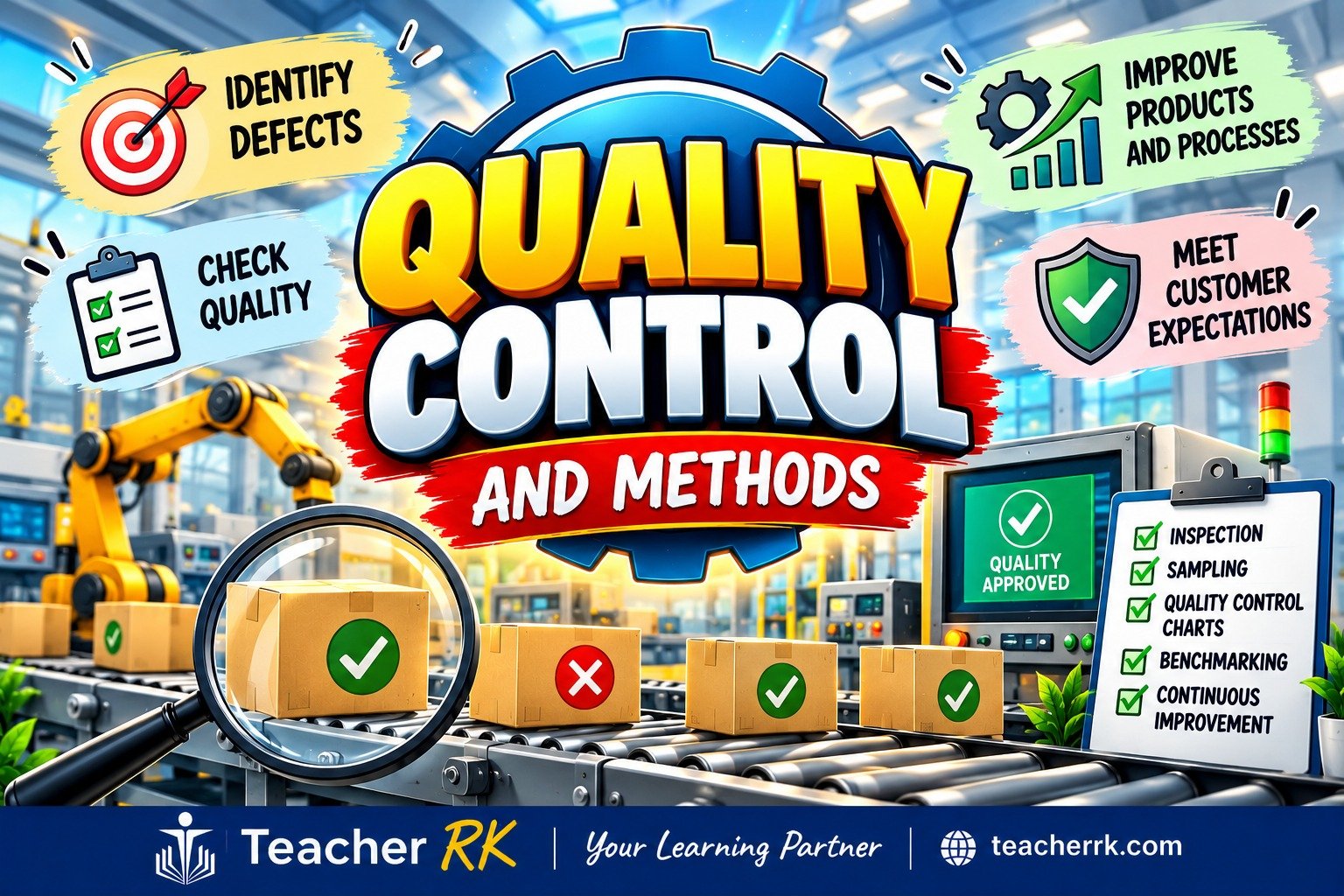
Quality control (QC) is the process of inspecting and testing products during or after production to identify and remove defects before they reach customers. It focuses on detecting and correcting quality problems in the finished product.
Features of quality control
· Focuses on identifying defects in products.
· Inspection and testing are carried out during or after production.
· Ensures products meet quality standards.
· Defective products are repaired, reworked, or rejected.
· Product-oriented approach.
What is quality assurance (QA)
Quality assurance (QA) is the process of designing and improving production processes to prevent defects from occurring. It focuses on ensuring that products are produced correctly the first time by maintaining consistent quality standards throughout the production process.
Features of Quality Assurance
· Focuses on preventing defects before they occur.
· Emphasizes improving production processes.
· Involves continuous monitoring and process improvement.
· Responsibility for quality is shared by all employees.
· Process-oriented approach.
Both quality assurance and quality control aim to deliver high-quality products and services. However, quality control focuses on detecting and correcting defects in finished products, whereas quality assurance focuses on preventing defects by improving production processes. Together, they help businesses improve customer satisfaction, reduce costs, and strengthen their competitive advantage.
difference between quality assurance and quality control (QA vs QC): Key Differences
| Parameter | Quality Assurance (QA) | Quality Control (QC) |
|---|---|---|
| Objective | Establishes processes and standards to achieve consistent quality | Ensures the final product meets defined quality requirements |
| Focus | Process-oriented | Product-oriented |
| Approach | Preventive | Detective |
| Aim | Prevent defects before they occur | Identify and correct defects |
| Nature | Proactive | Reactive |
| Scope | Covers processes used throughout development | Focuses on evaluating and testing deliverables |
| Activities | Process definition, audits, standards, reviews, and process improvement | Testing, inspection, validation, and defect identification |
| Program Execution | Generally focuses on processes and does not require direct software execution | May require software execution during testing and validation |
| Team Involvement | Involves developers, testers, managers, and other project stakeholders | Primarily involves testers and relevant reviewers |
| Example | Defining coding, testing, and development standards | Testing login, payment, or other application functionality |
Methods of quality management
Quality circles
Quality circles are small groups of employees who meet regularly to identify, discuss, and solve work-related problems. They encourage employee participation in improving quality, productivity, and workplace efficiency.
| Advantages | Disadvantages |
| 1. Improves employee involvement and motivation. 2. Helps identify practical solutions to quality problems | 1. Success depends on employee commitment and participation. 2. Implementing suggestions may take time and resources. |
Benchmarking
Benchmarking is the process of comparing a business’s products, services, or processes with those of leading organizations or competitors to identify best practices and improve performance.
| Advantages | Disadvantages |
| 1. Helps identify areas for improvement.· 2. Encourages continuous improvement and innovation. | 1. Collecting reliable benchmarking data can be difficult.· 2. Best practices may not always be suitable for every business. |
Total Quality Management (TQM)
Total Quality Management (TQM) is a company-wide approach to quality that involves all employees working together to continuously improve products, services, and processes in order to achieve high customer satisfaction.
| Advantages | Disadvantages |
| 1. Improves product quality and customer satisfaction.· 2. Reduces waste, defects, and production costs over time. | 1. Requires significant employee training and commitment.· 2. Implementation can be time-consuming and costly. |
These three methods complement one another. Quality circles encourage employee involvement, benchmarking helps businesses learn from industry leaders, and TQM creates a culture of continuous quality improvement throughout the organization.
National and international quality standards
To assure customers that products and services meet recognised quality, safety, and performance requirements, businesses often comply with national and international quality standards. These standards help build customer confidence, improve product quality, and facilitate international trade.
1. ISO (International Organization for Standardization)
The International Organization for Standardization (ISO) develops internationally recognised standards that help businesses improve the quality, safety, efficiency, and consistency of their products, services, and management systems. One of the most widely used standards is ISO 9001, which focuses on quality management systems.
Example: A manufacturing company obtains ISO 9001 certification to demonstrate that it consistently produces high-quality products.
2. CE Mark
The CE Mark is a certification mark used in the European Economic Area (EEA). It indicates that a product complies with European Union (EU) health, safety, and environmental protection requirements and can be legally sold within the EEA.
Example: Electrical appliances, toys, and medical devices sold in Europe often carry the CE Mark.
3. BSI Kitemark
The BSI Kitemark is a quality certification issued by the British Standards Institution (BSI). It indicates that a product has been independently tested and meets recognised British standards for quality, safety, and performance.
Example: Fire extinguishers, safety helmets, and electrical products may carry the BSI Kitemark.
4. ISI Mark (India)
The ISI Mark is a certification mark issued by the Bureau of Indian Standards (BIS). It certifies that a product complies with Indian standards for quality, safety, and reliability.
Example: Electrical appliances, cement, LPG cylinders, and packaged drinking water sold in India often display the ISI Mark.
Thus, national and international quality standards help businesses produce safe, reliable, and high-quality products. Certifications such as ISO, the CE Mark, the BSI Kitemark, and the ISI Mark enhance customer confidence, improve business credibility, and enable companies to compete effectively in domestic and international markets.
Quick Recap
1. Lean production is a production approach that aims to maximize customer value while minimizing waste and improving efficiency.
2. The main features of lean production include waste reduction, continuous improvement, efficient use of resources, high quality, and responsiveness to customer demand.
3. Continuous Improvement (Kaizen) focuses on making small, ongoing improvements to products, processes, and work practices with the involvement of all employees.
4. Just-in-Time (JIT) is a lean production method in which materials and components are received or produced only when they are needed, reducing inventory and storage costs.
5. Just-in-Case (JIC) involves maintaining extra inventory to protect the business against unexpected demand or supply chain disruptions.
6. Quality control (QC) focuses on identifying and correcting defects by inspecting and testing products during or after production.
7. Quality assurance (QA) focuses on preventing defects by improving production processes and ensuring products are made correctly the first time.
8. Quality circles, benchmarking, and Total Quality Management (TQM) are important methods used by businesses to improve quality and operational performance.
9. National and international quality standards such as ISO, the CE Mark, the BSI Kitemark, and the ISI Mark help businesses demonstrate that their products meet recognised quality and safety standards.
10. Businesses that adopt lean production and effective quality management can reduce costs, improve product quality, increase customer satisfaction, and strengthen their competitive advantage.