
Table of Contents
Introduction
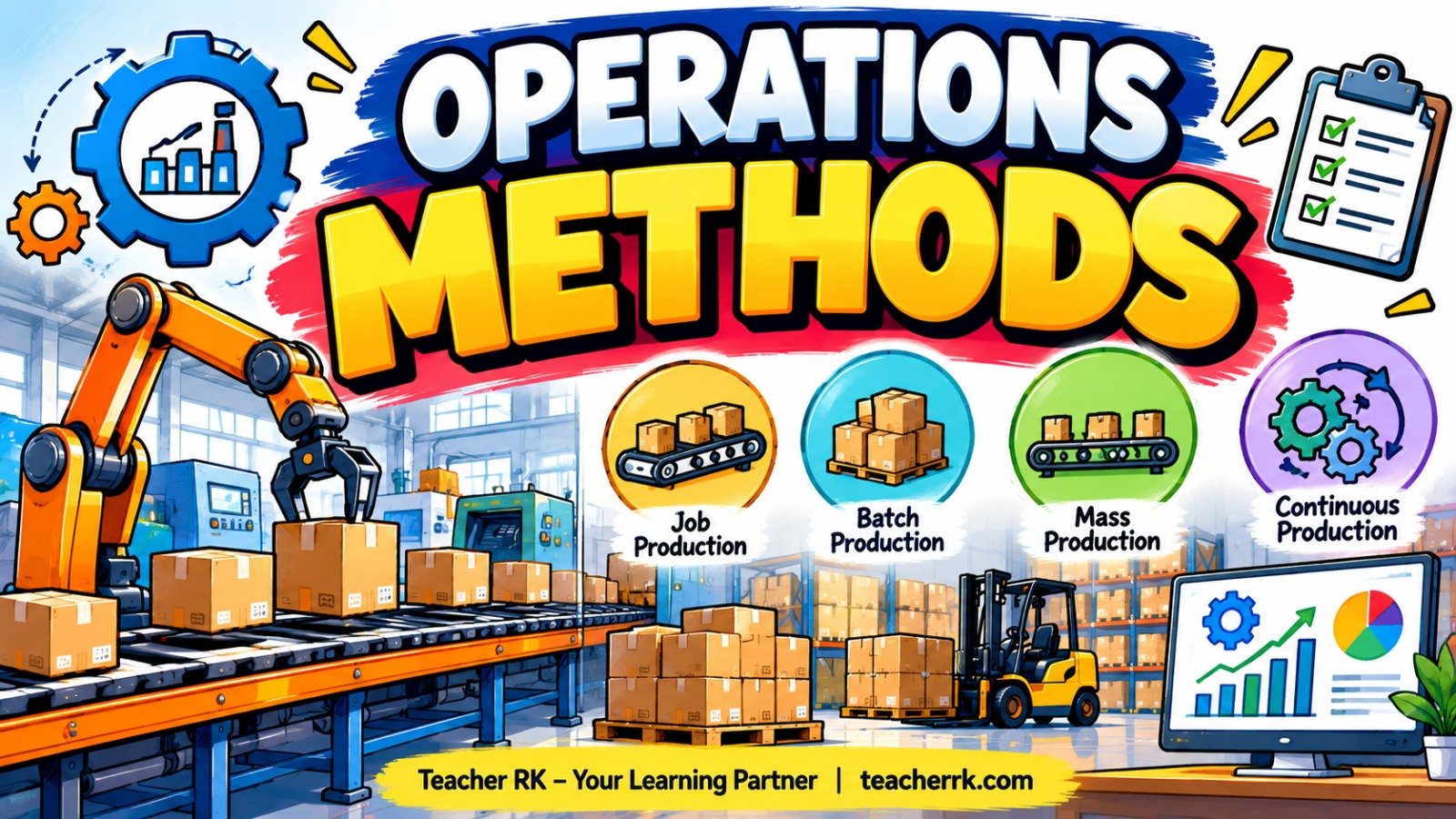
Businesses use different production methods depending on the type of product they make, the level of customer customization required, and the volume of output. Selecting the appropriate production method is important because it affects production costs, efficiency, quality, flexibility, and customer satisfaction.
The four common production methods are job production, batch production, mass (flow) production, and mass customization. Each method has its own advantages and limitations and is suitable for different types of businesses.
Job Production
Job production is a production method in which a single product or a small quantity of products is made to meet the specific requirements of an individual customer. Each product is unique and is usually completed before the next one is started.
Examples: Custom-made wedding dresses, bespoke furniture, luxury yachts, and custom-built houses.
Job production – features
· Produces one product or a small quantity at a time.
· Products are made to meet individual customer requirements.
· Requires skilled labour and craftsmanship.
· Each job is completed before the next one begins.
| Advantages of job production | Disadvantages of job production |
| 1. High level of customization to meet customer needs.· 2. High quality due to skilled craftsmanship and attention to detail.· 3. Customers are often willing to pay premium prices. | 1. High production costs due to labour-intensive processes.· 2. Time-consuming because each product is made individually.· 3. Difficult to achieve economies of scale. |
Batch Production
Batch production is a production method in which identical products are manufactured in groups or batches. Once one batch is completed, production equipment is adjusted before the next batch is produced.
Industry Examples: Bakeries producing batches of bread or cakes, pharmaceutical companies manufacturing medicines, clothing manufacturers producing seasonal collections, and furniture manufacturers producing dining tables
Batch production – features
· Products are produced in groups or batches.
· Each batch passes through the same production process.
· Machines are reset or reconfigured between batches.
· Suitable for producing a variety of similar products.
| Advantages of batch production | Disadvantages of batch production |
| 1. More efficient than job production.· 2. Allows some variety while maintaining production efficiency.· 3. Suitable for meeting varying customer demand. | 1. Machine set-up between batches increases production time.· 2. Inventory may build up if demand is overestimated.· 3. Higher unit costs than mass production. |
Mass (flow) production
Mass production, also known as flow production, is a production method in which standardized products are manufactured continuously on an assembly line. Large quantities of identical products are produced using specialized machinery and automation.
Examples: Automobile manufacturing, soft drink bottling plants, smartphone assembly, and household appliance manufacturing
Mass (Flow) Production – Features
· Produces large quantities of standardized products.
· Uses assembly lines and specialized machinery.
· Continuous production process with little interruption.
· High level of automation and efficiency.
| Advantages of mass production | Disadvantages of mass production |
| 1. Low average cost per unit due to economies of scale.· 2. High production efficiency and output.· 3. Consistent product quality through standardized processes. | 1. Very high initial investment in machinery and equipment.· 2. Limited flexibility to change product designs.· 3. Production disruptions can stop the entire assembly line. |
Mass Customization
Mass customization is a production method that combines the efficiency of mass production with the flexibility of customization. Businesses produce standardized products but allow customers to choose specific features, colours, sizes, or designs according to their preferences.
Examples: Nike customized shoes, Dell build-to-order computers, customized automobiles, and personalized furniture
Mass customization – features
· Combines mass production with product customization.
· Customers can choose specific product features or designs.
· Uses flexible manufacturing systems and advanced technology.
· Produces standardized products with personalized options.
| Advantages of mass customisation | Disadvantages of mass customisation |
| 1. Meets individual customer preferences while maintaining production efficiency.· 2. Increases customer satisfaction and brand loyalty.· 3. Allows businesses to differentiate themselves from competitors. | 1. More complex production planning and scheduling.· 2. Requires advanced technology and flexible manufacturing systems.· 3. Higher production costs than traditional mass production. |
Examples
| Job Production | Car Example:· Building a custom-made luxury car on special order (e.g., Rolls-Royce Bespoke). Each car is handcrafted, with unique interiors, colours, and features chosen by the customer. |
| Batch Production | Car Example:· Producing 100 cars in a batch with the same paint colour (e.g., 100 red units), then switching to another batch with a different colour or features. Each batch goes through the production process one group at a time. |
| Flow Production | Car Example:· A modern factory (like Toyota or Hyundai) where cars move along a conveyor-based assembly line. One station installs the engine, another fits the doors, another paints, and so on. Thousands of identical cars are produced efficiently. |
| Mass Customisation | Car Example:· Customers select options like colour, interior material. engine type. infotainment features· The base model is mass-produced, but custom options (e.g., sunroof, alloy design, navigation system) are added based on customer preference. |
Thus, the choice of production method depends on factors such as the nature of the product, customer requirements, production volume, and available resources. Job production offers maximum customization, batch production balances variety and efficiency, mass production focuses on high-volume standardized output, while mass customization combines efficiency with personalized products to meet individual customer preferences.
Quick Recap
1. Businesses choose a production method based on the nature of the product, customer requirements, production volume, and available resources.
2. Job production involves producing a single, customized product to meet the specific requirements of an individual customer.
3. Batch production involves producing identical products in groups (batches) before switching to another batch.
4. Mass (flow) production uses assembly lines and standardized processes to produce large quantities of identical products efficiently.
5. Mass customization combines the efficiency of mass production with the flexibility of producing products that meet individual customer preferences.
6. Job production offers the highest level of customization but is usually the most time-consuming and expensive production method.
7. Batch production provides a balance between product variety and production efficiency, making it suitable for medium-volume production.
8. Mass production achieves economies of scale, resulting in low unit costs, high output, and consistent product quality.
9. Mass customization improves customer satisfaction by offering personalized products while maintaining relatively efficient production.
10. The choice of production method affects a business’s costs, efficiency, flexibility, product quality, and ability to satisfy customer needs.