
Table of Contents
Introduction
Advances in technology, transportation, and communication have made it easier for businesses to sell products and services beyond their domestic markets. As a result, many businesses use International Marketing to expand into foreign markets, reach new customers, increase sales, and strengthen their competitive position. However, operating in foreign markets also presents several challenges that businesses must carefully manage.
What is International Marketing
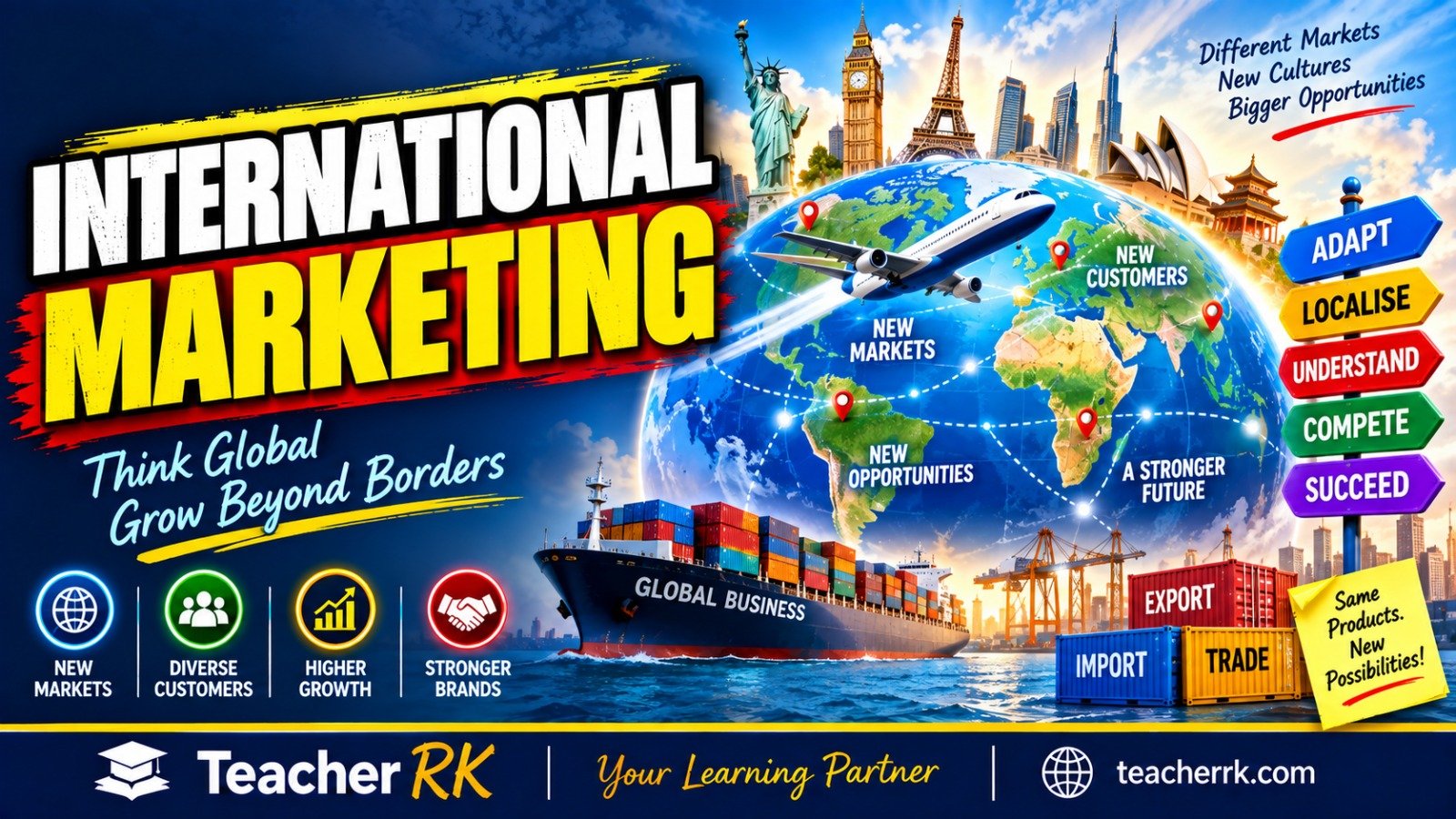
International marketing meaning refers to the process of planning and carrying out marketing activities across national borders. It involves identifying, satisfying, and retaining customers in foreign markets by adapting marketing strategies to meet local needs and preferences.
Opportunities of International Marketing
· Larger market size: Businesses gain access to a larger customer base, increasing potential sales and revenue.
· Increased profitability: Selling products in multiple countries can lead to higher sales volumes and profits.
· Business growth: International expansion provides opportunities for growth beyond the domestic market.
· Diversification of risk: Operating in different countries reduces dependence on a single market and helps spread business risks.
· Stronger brand recognition: Successful international expansion can enhance global brand awareness and reputation.
What Is the Scope of International Marketing?
International marketing is about taking your products or services beyond your home country and making them work in places where people think, shop, and spend differently. It starts with understanding a foreign market: who the customers are, what they need, and what they’re already buying. From there, it covers everything else, including product development, packaging, pricing, distribution, advertising, and building a brand that people in another country will actually remember.
It also takes in export marketing and managing international supply chains. And it means paying attention to things that don’t show up on a spreadsheet, like cultural habits, local laws, and how the market is shifting. A product that sells like crazy in one country can flop in another simply because the message, the price, or even the colour of the packaging didn’t sit right. Businesses that do their homework and plan carefully are the ones that usually find their footing in global markets.
What Are the Benefits of International Marketing?
Selling in one country means your business rises and falls with that one economy. Going international gives you more room to grow, more customers to reach, and a bit of breathing space when things get tough at home. Here’s what it can do for a business.
1. More Sales and Revenue
A bigger market means more people who might buy from you. Once you look beyond your home country, your growth isn’t limited by how many customers you can find locally.
2. Better Market Insights
Every new country teaches you something. You see how people shop, what they care about, and which trends are catching on. Much of this can help you improve your products and sharpen your marketing, even back home.
3. Stronger Brand Awareness
When people in different countries start seeing and talking about your brand, your reputation grows with it. Being known globally adds credibility and makes it easier for new customers to trust you.
4. A Wider Customer Base
International expansion puts your business in front of people who might never have heard of you otherwise. Different regions bring different kinds of customers, and that variety opens up new paths for growth.
5. Market Diversification
Relying on one market is risky. If demand drops or the economy slows there, your whole business feels it. With customers in several countries, a slow patch in one place can be balanced out by steady sales in another.
Challenges of International Marketing
· Cultural differences: Differences in language, customs, values, and consumer preferences may require businesses to adapt their products and marketing strategies.
· Legal and regulatory differences: Businesses must comply with different laws, regulations, and business practices in each country.
· Increased competition: Foreign markets may already have strong local and international competitors.
· Exchange rate fluctuations: Changes in currency exchange rates can affect costs, prices, and profitability.
· Political and economic risks: Political instability, trade restrictions, inflation, or economic downturns may negatively impact business operations.
Thus, international marketing involves promoting and selling products and services in foreign markets. While it offers opportunities such as larger markets, increased profits, business growth, and risk diversification, businesses must also overcome challenges related to culture, competition, regulations, exchange rates, and political conditions.
Chapter Snapshot
1. International marketing refers to the process of planning and carrying out marketing activities across national borders.
2. Businesses engage in international marketing to reach customers in foreign markets and increase sales opportunities.
3. International marketing often requires businesses to adapt their products, prices, promotions, and distribution strategies to local market conditions.
4. One of the main opportunities of international marketing is access to a larger customer base.
5. International expansion can lead to higher sales, increased profits, and business growth.
6. Operating in multiple countries helps businesses diversify risk and reduce dependence on a single market.
7. Successful international marketing can strengthen global brand awareness and reputation.
8. Cultural differences, such as language, customs, and consumer preferences, can create challenges for international marketers.
9. Businesses must comply with different legal, political, and economic environments when operating in foreign markets.
10. Exchange rate fluctuations and intense competition can affect the profitability and success of international marketing activities.