
Table of Contents
Introduction
People start businesses for a variety of personal, financial, and social reasons. While motivations may differ from one entrepreneur to another, the following are some of the most common reasons for starting a business.
1. Financial independence
Starting a business provides an opportunity to earn income and build wealth. Successful entrepreneurs can achieve greater financial freedom than they might through traditional employment.
2. Pursue passion
Many entrepreneurs start businesses based on their interests, talents, or hobbies. Turning a passion into a profession can make work more enjoyable and meaningful.
3. Flexibility in schedule
Business owners often have greater control over their working hours. This flexibility can help them balance work, family, and personal commitments.
4. Be Your own boss
Entrepreneurs enjoy the freedom to make decisions and manage their businesses according to their vision and goals, without reporting to a supervisor.
5. Create jobs
New businesses generate employment opportunities for others, contributing to economic growth and improving livelihoods within communities.
6. Personal fulfilment
Building and growing a business can provide a strong sense of achievement and satisfaction. Entrepreneurs often take pride in creating something of value.
7. Innovation opportunity
Starting a business allows individuals to introduce new products, services, or processes that solve problems and meet customer needs in unique ways.
8. Control over decisions
Business owners have the authority to make strategic decisions regarding products, operations, marketing, and future growth plans.
9. Potential for growth
A successful business can expand over time by attracting more customers, entering new markets, and increasing profits.
10. Serve the community
Many businesses are established to address local needs, improve quality of life, and contribute positively to the communities they serve.
Challenges that new businesses may face
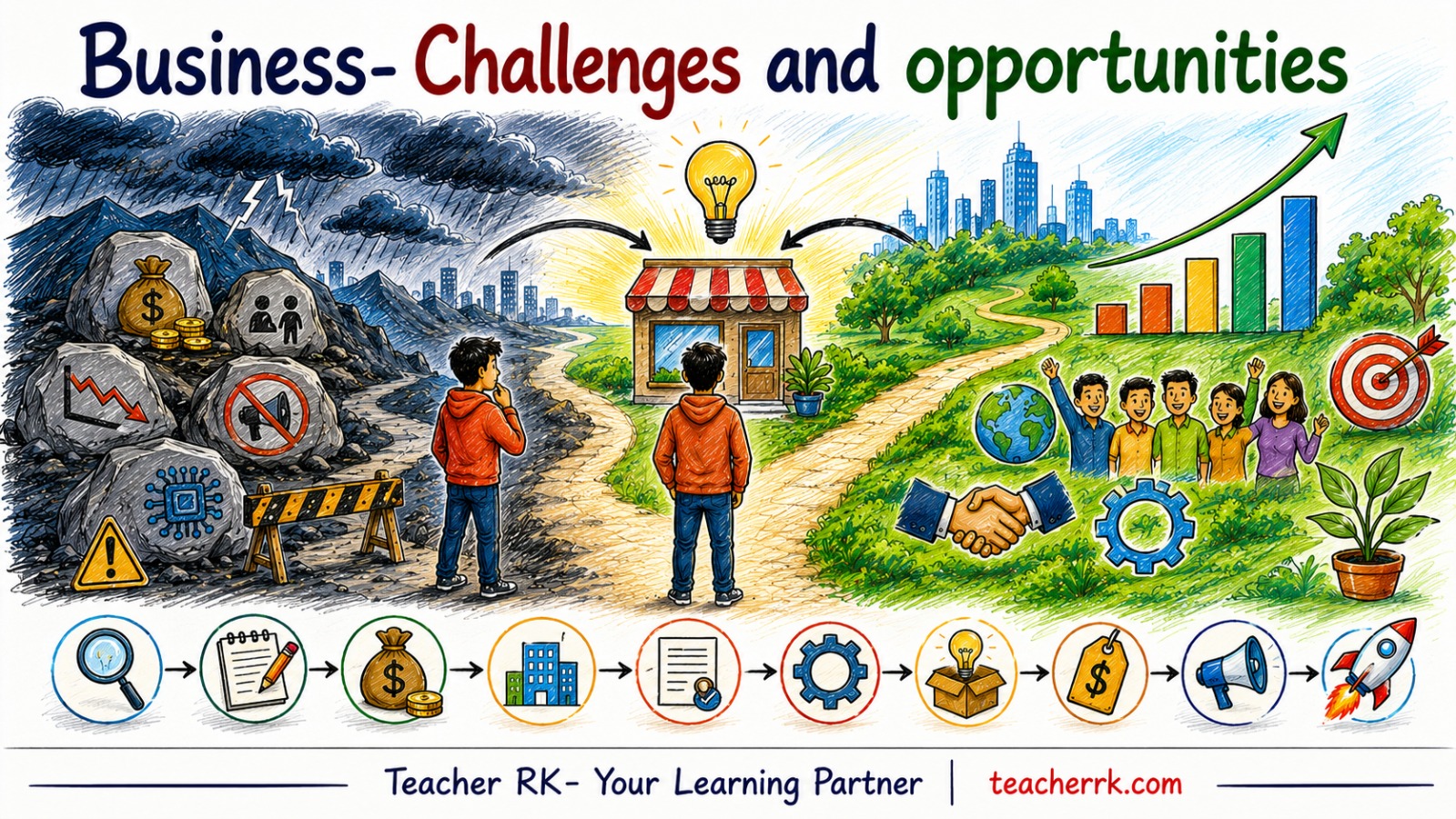
Starting a business can be exciting and rewarding, but it also comes with several challenges. Entrepreneurs must overcome these obstacles to establish and grow a successful business.
Lack of capital
Many new businesses struggle to secure sufficient funds for start-up costs, equipment, inventory, marketing, and day-to-day operations. Limited capital can restrict growth and business activities.
Market competition
New businesses often compete with established companies that already have loyal customers, strong brand recognition, and greater resources. Standing out in a competitive market can be difficult.
Finding skilled labour
Recruiting and retaining qualified employees can be challenging, especially for small businesses with limited budgets and resources.
Uncertain cash flow
Cash flow refers to the movement of money into and out of a business. New businesses may experience irregular income while still needing to pay expenses such as rent, salaries, and suppliers.
Building brand awareness
Customers may not be familiar with a new business or its products. Creating awareness and building trust requires effective marketing and consistent customer experiences.
Regulatory compliance
Businesses must comply with various laws and regulations related to taxation, employment, health and safety, environmental protection, and licensing. Failure to comply can result in penalties or legal issues.
Managing growth
Rapid growth can create challenges such as increased operational demands, staffing requirements, and resource constraints. Businesses must plan carefully to manage expansion effectively.
Economic downturns
Changes in economic conditions, such as recessions or inflation, can reduce consumer spending and negatively affect business sectors sales and profitability.
Customer acquisition
Attracting new customers is often one of the biggest challenges for start-ups. Businesses need effective marketing strategies and a strong value proposition to gain customers.
Technology integration
Businesses must adopt and use technology efficiently to remain competitive. Implementing new systems, software, and digital tools can be costly and require employee training.
While these challenges can be significant, careful planning, effective management, and adaptability can help entrepreneurs overcome obstacles and build sustainable businesses.
Steps in the process of starting a business
Starting a business is an exciting journey that requires careful planning, preparation, and execution. Entrepreneurs must move through a series of important steps to transform an idea into a successful and sustainable business. Each step helps reduce risk, improve decision-making, and increase the likelihood of long-term success.
Steps in the Process of Starting a Business
- Research and validate the business idea
- Write a business plan
- Secure financing
- Choose a business structure
- Register the business and obtain necessary licenses
- Set up business operations and infrastructure
- Develop products or services
- Establish pricing and sales strategy
- Market and promote the business
- Launch the business
Starting a business involves much more than having a good idea. It requires careful planning, adequate resources, and effective execution. By following a structured start-up process, entrepreneurs can build a strong foundation for growth, profitability, and long-term success.
Quick Recap
1. People start businesses for many reasons, including financial independence, pursuing a passion, flexibility, innovation, and serving the community , sole traders.
2. Being your own boss gives entrepreneurs greater control over business decisions and future growth.
3. Successful businesses can create employment opportunities, contribute to economic development, and improve standards of living.
4. New businesses often face challenges such as limited capital, intense competition, uncertain cash flow, and low brand awareness.
5. Other common challenges include finding skilled employees, complying with government regulations, managing growth, and adopting new technology.
6. Careful planning, effective management, and adaptability help entrepreneurs overcome start-up challenges.
7. The first step in starting a business is to research and validate the business idea to determine whether it is feasible and meets customer needs.
8. A business plan outlines the objectives, strategies, operations, marketing, and financial plans of the business and serves as a roadmap for success.
9. Entrepreneurs must secure financing, choose a suitable structure, register the business, and set up operations before launching.
10. A successful business launch requires effective product development, pricing, marketing, and promotion, followed by continuous improvement to achieve long-term growth.
| Useful links: Worksheet Case study Classroom activity |